
By Chandra Kant Bapat
Retd.: IOFS
For more than years, people with diabetes who required insulin have been taking injections every day. Now, medical science has achieved an important milestone with the introduction of the world’s first once-a-week basal insulin, marketed under the brand name Awiqli® (Insulin Icodec) in India.
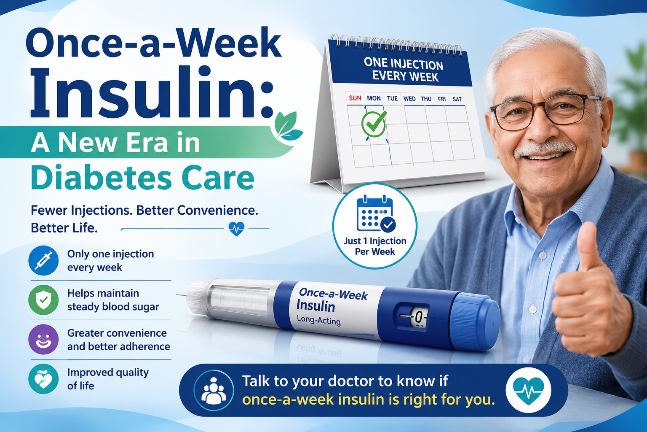
This innovation has generated great interest among doctors as well as diabetic patients, particularly senior citizens who find it difficult to take daily injections. However, it is important to understand that this new insulin is not suitable for every diabetic patient and should be used only on the advice of a qualified diabetologist or physician.
Why is this development important?
Millions of people with diabetes require basal (long-acting) insulin to maintain blood sugar levels throughout the day and night. This significantly reduces the treatment burden and may improve patient compliance.
Traditionally, they need:
- One injection every day
- Around 365 injections every year
- With the new once-weekly insulin:
- Only one injection every week
- About 52 injections in a year
What is Basal Insulin?
- Our body normally releases a small amount of insulin continuously, even when we are not eating.
- Basal insulin is designed to replace this background insulin.
- It is different from the rapid-acting insulin taken before meals.
- The newly introduced weekly insulin provides this background insulin for an entire week with a single injection.
What is Awiqli® (Insulin Icodec)?
Awiqli is the brand name of Insulin Icodec, developed by Novo Nordisk. It is the first once-weekly basal insulin approved for clinical use and has now been launched in India.
Advantages of Once-a-Week Insulin
1. Fewer injections: The biggest advantage is convenience. Patients who fear injections or frequently forget their daily dose may find weekly insulin easier.
2. Better treatment adherence: Many patients delay starting insulin because they dislike daily injections. Doctors believe that weekly insulin may encourage patients to begin insulin therapy earlier when required.
3. Better quality of life: Senior citizens, working professionals and caregivers may find weekly injections much easier to manage.
4. Similar blood sugar control: Clinical trials have shown that once-weekly insulin provides blood sugar control comparable to daily long-acting insulin in appropriate patients.
Is it suitable for everyone?
No. This is probably the most important point. Doctors clearly state that weekly insulin will not replace daily insulin for every diabetic patient.It may be appropriate for selected patients, especially:
- Adults with Type 2 Diabetes requiring basal insulin
- Patients who miss daily injections
- Elderly patients needing a simpler insulin schedule
It may not be suitable for everyone with Type 1 Diabetes or for patients whose insulin dose needs frequent adjustment. The decision should always be made by a diabetes specialist.
Are there any precautions?
Yes. Since the insulin works for an entire week.
- Missing a dose can have greater consequences than missing a daily dose.
- The correct dose must be carefully calculated by the treating doctor.
- Patients should continue regular blood sugar monitoring.
- Never change from daily insulin to weekly insulin on your own.
What about side effects?
The side effects are generally similar to other long-acting insulins.These include:
- Low blood sugar (hypoglycaemia)
- Injection site reactions
- Weight gain in some patients
Patients should learn to recognise symptoms of low blood sugar such as sweating, dizziness, hunger, shaking and confusion, and seek medical advice if these occur.
Cost in India
Novo Nordisk has launched Awiqli in India in prefilled pen devices.
The company states that pricing has been kept broadly comparable with daily basal insulin therapy for many patients, although the actual monthly expense depends on the prescribed dose.
What does this mean for CGHS beneficiaries?
- Many CGHS beneficiaries are senior citizens living with diabetes.
- Once-weekly insulin has the potential to:
- Reduce the number of injections
- Improve treatment compliance
- Simplify diabetes management
- Improve quality of life
However, beneficiaries should remember that:
- It is not a substitute for medical advice.
- Availability under CGHS or through empanelled hospitals will depend on CGHS policies and approved medicine lists.
- Patients should consult their treating physician or endocrinologist before considering this treatment.
Final Thoughts
The introduction of once-weekly insulin is one of the most significant advances in diabetes care in recent years. By reducing injections from 365 to just 52 per year, it has the potential to make life easier for many patients and improve long-term adherence to insulin therapy. Nevertheless, it is not suitable for everyone, and the decision to use it should always be taken jointly by the patient and the treating doctor after a careful medical evaluation.
As always, maintaining a healthy diet, regular physical activity, monitoring blood glucose, and following your doctor’s advice remain the cornerstones of successful diabetes management.
Disclaimer: This article is written based on information available in public domain intended for public awareness and educational purposes only. It should not be considered a substitute for professional medical advice. Always consult your treating physician or endocrinologist before making any changes to your diabetes treatment